Orders of Protection in Illinois: How the Process Works
Illinois law creates three levels of orders of protection — emergency, interim, and plenary — that restrict a respondent's contact with a protected person. Emergency orders are granted the same day without the respondent present. Interim orders bridge the gap until a full hearing. A plenary order, lasting up to two years, requires both sides to appear in court. Violating any order can result in criminal charges.
What Is an Order of Protection in Illinois?
An order of protection is a civil court order that restricts one person's behavior toward another person who claims abuse, harassment, or a credible threat of harm. In Illinois, these orders are governed primarily by the Illinois Domestic Violence Act of 1986, codified at 750 ILCS 60/. While the order itself is civil in nature, violating it is a criminal offense — a critical distinction that every respondent and petitioner should understand.
Orders of protection are not the same as criminal charges. A person does not need to be arrested, charged, or convicted of a crime before a court issues one. The petitioner — the person seeking protection — files a petition in civil court, and a judge decides whether to grant it based on the civil standard of evidence.
Who can petition for an order of protection?
Under 750 ILCS 60/201, a petition may be filed by or on behalf of:
- A family or household member who has been abused
- A person in a dating relationship with the respondent
- A caregiver for a high-risk adult who has been abused
- A state's attorney, state agency, or another person acting on behalf of a minor or a person with disabilities
The law defines "family or household members" broadly. It includes spouses, former spouses, parents, children, stepchildren, people who share or formerly shared a home, people who share a child in common, and people who are currently or were formerly in a dating or engagement relationship.
What conduct can an order address?
Illinois courts can prohibit a wide range of behavior through an order of protection. Common restrictions include:
- Prohibiting any physical abuse, harassment, intimidation, or interference with personal liberty
- Ordering the respondent to stay away from the petitioner's home, workplace, or school
- Granting exclusive possession of a shared residence to the petitioner
- Restricting contact with minor children
- Requiring the respondent to surrender firearms
- Ordering the respondent to pay temporary support or reimburse the petitioner for losses caused by the abuse
These remedies are listed in 750 ILCS 60/214 and can be combined in a single order depending on the facts of the case.
The Three-Tier System: Emergency, Interim, and Plenary Orders
Illinois uses a staged system designed to give immediate protection to someone in danger while still preserving due process rights for the person being restrained. Each tier has a distinct purpose, duration, and procedural standard.
Tier 1 — Emergency Order of Protection (EOP)
An emergency order is the first and fastest form of relief. Under 750 ILCS 60/217, a judge may grant an EOP on an ex parte basis — meaning only the petitioner appears in court, and the respondent is not present and has no advance notice.
To obtain an EOP, the petitioner must allege that immediate danger of abuse exists and that notifying the respondent in advance would likely put the petitioner at greater risk. The judge decides based solely on the petitioner's testimony and any supporting documents.
If granted, an emergency order takes effect immediately. It remains in force for a short, fixed period — check the current statutory text at ilga.gov for the exact number of days, as the statute controls. Because the respondent has not yet had an opportunity to be heard, the law requires a follow-up hearing relatively quickly.
Tier 2 — Interim Order of Protection
An interim order is a bridge. Under 750 ILCS 60/218, it may be issued when a court has already obtained jurisdiction over the respondent — for example, once the respondent has been served with notice of the case. An interim order can be granted even if the full evidentiary hearing has not yet taken place.
Interim orders last until the date of the plenary hearing. They allow the court to maintain protection for the petitioner while both sides prepare for the more comprehensive proceeding. A respondent who has been served can appear at the interim hearing and present an argument, though the full merits are typically reserved for the plenary stage.
Tier 3 — Plenary Order of Protection
The plenary order is the most comprehensive and longest-lasting form of protection. Under 750 ILCS 60/219, a plenary order requires proper notice to the respondent and an opportunity for both parties to be heard — it cannot be granted ex parte.
At the plenary hearing, both the petitioner and the respondent may present evidence, call witnesses, and cross-examine the other side. The petitioner must prove by a preponderance of the evidence — meaning it is more likely true than not — that abuse occurred and that the requested remedies are necessary.
If granted after a full hearing, a plenary order can last up to two years and may be renewed. It can include the full range of remedies available under 750 ILCS 60/214, including firearms surrender, child custody arrangements, and support payments.
The three tiers work together: an emergency order provides immediate safety, an interim order maintains that protection while the case develops, and the plenary hearing gives both sides a fair opportunity to present their full story before a longer-term order is entered.

Civil vs. Criminal: Understanding the Distinction
One of the most important — and most misunderstood — aspects of Illinois orders of protection is the line between the civil and criminal systems. This distinction has real consequences for both petitioners and respondents.
The order itself is civil
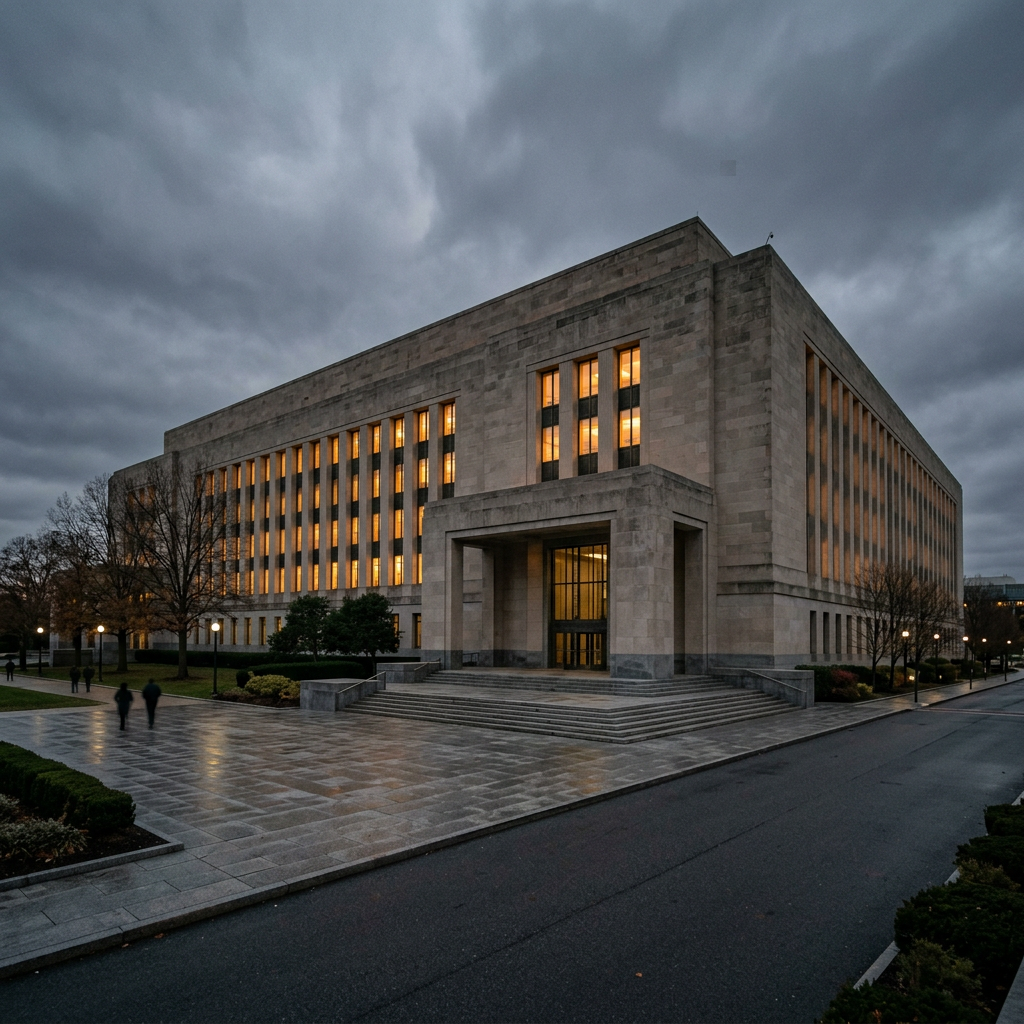
A petition for an order of protection is filed in civil court. In Cook County, domestic violence petitions are typically heard at Cook County Domestic Violence Court, located at 555 W. Harrison Street in Chicago. This court handles both civil orders of protection and related criminal domestic violence cases, which is somewhat unusual and reflects Cook County's integrated approach to addressing domestic abuse.
The Cook County State's Attorney's Office plays a role in criminal domestic violence prosecutions that may run parallel to a civil protection order case. It is entirely possible for a respondent to face both a civil order of protection and separate criminal charges arising from the same incident — these are two different legal proceedings with different standards of proof and different consequences.
Violating the order is criminal
While obtaining an order is a civil process, violating one crosses into criminal law. Under 720 ILCS 5/12-3.4, a first violation of an order of protection is typically a Class A misdemeanor, which carries potential penalties of up to 364 days in jail and a fine. Subsequent violations, or violations involving specific aggravating circumstances such as use of a weapon or prior convictions, can be charged as a Class 4 felony or higher.
This means a respondent who ignores a no-contact provision — even something that might seem minor, like sending a text message — can face arrest and criminal prosecution entirely separate from the original civil case.
Different standards of proof
In the civil order of protection proceeding, the petitioner must prove abuse by a preponderance of the evidence — the civil standard. In a related criminal case, the prosecution must prove guilt beyond a reasonable doubt — the much higher criminal standard. A respondent can win in criminal court and still have a civil order of protection entered against them, or vice versa.
How Cook County Domestic Violence Court Works
Cook County's approach to domestic violence cases is worth understanding specifically, because it differs in important ways from how other counties in Illinois handle these matters.
An integrated model
Cook County Domestic Violence Court at 555 W. Harrison Street uses what is often called an "integrated domestic violence" model. Civil and criminal matters related to the same family or household can be handled by the same judge or in the same courthouse, reducing the burden on victims of navigating multiple court buildings and reducing the risk of conflicting court orders.
Petitioners seeking an emergency order of protection in Cook County can file at the courthouse. Court staff and advocates are typically available to help petitioners complete the paperwork, though they cannot provide legal advice. The Cook County Public Defender's Office represents eligible respondents who face criminal charges, and respondents in civil proceedings may seek private counsel or self-represent.
What happens after filing
Once an emergency order is granted, the respondent must be formally served with notice. In Cook County, law enforcement — typically the Chicago Police Department or the Cook County Sheriff's Office — is responsible for serving the order. The order is also entered into the Illinois State Police's Law Enforcement Agencies Data System (LEADS), which makes it visible to any officer who runs the respondent's name. It may also be submitted to national databases maintained through the federal government.
The plenary hearing date
The emergency order sets a date for the next hearing. If the respondent has been served, the case moves toward a plenary hearing. Both parties will have the opportunity to appear before a judge at the Richard J. Daley Center or the Domestic Violence Courthouse, depending on how the case is assigned. Missing the hearing date can have serious consequences: a petitioner who does not appear may have the order dismissed; a respondent who does not appear may have a plenary order entered against them by default.
What a Respondent Should Do Before the Plenary Hearing
If you have been served with an emergency or interim order of protection, the steps you take before the plenary hearing are critically important. The hearing is your legal opportunity to contest the order, present your side, and potentially prevent a two-year plenary order from being entered against you.
Comply with the existing order — immediately
This cannot be overstated. Even if you believe the allegations are false, untrue, or exaggerated, you must comply with every restriction in the existing emergency or interim order from the moment you are served. Violating the order before the hearing will result in criminal charges and will almost certainly damage your credibility with the judge at the plenary hearing.
If the order restricts you from your own home, you cannot return — even to retrieve belongings — without first going back to court and obtaining permission. Contact an attorney before taking any action that might be interpreted as a violation.
Gather and preserve evidence
The plenary hearing is a real evidentiary proceeding. You have the right to:
- Present your own testimony under oath
- Call witnesses who have relevant, firsthand knowledge
- Introduce documents, text messages, emails, photos, or other records that contradict the petitioner's allegations
- Cross-examine the petitioner and any witnesses they call
Begin collecting evidence as soon as you are served. Save electronic communications. Identify witnesses who can speak to relevant facts. If there are prior court records, communications, or other documentation that provide context, preserve them.
Understand what you are contesting
At the plenary hearing, the petitioner must prove abuse by a preponderance of the evidence. You are entitled to challenge both the underlying factual allegations and the specific remedies requested. For example, even if the judge finds some level of abuse occurred, you may be able to argue that certain requested remedies — such as restrictions on child visitation — are broader than necessary.
Consider the overlap with any criminal case
If criminal charges have also been filed based on the same incident, your civil order of protection hearing and your criminal case may involve overlapping facts. Testimony you give in the civil hearing can potentially be used in your criminal case. This is one of the most important reasons to consult with an attorney before the plenary hearing if at all possible. The Cook County Public Defender's Office may be able to assist if you qualify based on income.
Show up
If you do not appear at the plenary hearing after being properly served, the judge can enter a plenary order of protection against you by default — without hearing your side at all. A plenary order can last up to two years, appear in law enforcement databases, affect your firearms rights under both Illinois and federal law, and have consequences for employment and housing. Appearing and presenting your case is almost always better than not appearing.

What Happens After a Plenary Order Is Entered
A plenary order of protection is not necessarily the end of the legal process. Both petitioners and respondents have options after the order is entered.
For petitioners: renewal and modification
A plenary order can be renewed before it expires if the petitioner believes continued protection is necessary. Under 750 ILCS 60/220, the court may renew an order on the same grounds used to enter it. Petitioners can also return to court to modify the order — for example, to add or change specific restrictions — if circumstances change.
If the respondent violates the order at any point, the petitioner should report the violation to law enforcement immediately. Officers who verify a violation can make an arrest. The violation will result in a separate criminal case.
For respondents: appeal and modification
A respondent who believes the plenary order was entered improperly — for example, because the petitioner did not meet the burden of proof — has the right to appeal to the Illinois Appellate Court. Appeals must be filed within strict deadlines after the order is entered; missing the deadline can forfeit the right to appeal.
A respondent may also petition the court to modify or vacate the order if there is a significant change in circumstances. For example, if the petitioner and respondent have reconciled and the petitioner wishes to withdraw the order, the petitioner can ask the court to dismiss it — though the court is not required to grant that request automatically.
Firearms consequences
Under both Illinois and federal law, a person subject to a qualifying order of protection may be prohibited from possessing firearms. Under the federal Gun Control Act (18 U.S.C. § 922(g)(8)), a plenary order of protection that meets certain criteria can trigger a federal prohibition on firearm possession. Illinois law independently imposes firearms restrictions under 430 ILCS 65/ (the Firearm Owners Identification Card Act). Respondents subject to an order may be required to surrender their FOID card and any firearms.
The record
A civil order of protection, unlike a criminal conviction, is a civil court record. However, it is entered into law enforcement databases through the Illinois State Police and may appear in background checks depending on the type of check being conducted. Respondents should consult with an attorney about what records may be visible and whether any steps are available to limit access after an order expires.
Orders of protection are serious legal documents with real-world consequences on both sides of the courtroom. Understanding how the three-tier system works — and what rights each party has at every stage — is the foundation for navigating the process as effectively as possible.
Frequently Asked Questions
The editorial team researches and writes plain-language immigration information, drawing on official government sources and reviewing each page for clarity and accuracy.
Sources & Citations
- [1]Official Government Source: Illinois Domestic Violence Act of 1986 — 750 ILCS 60/ (ILGA)
- [2]Official Government Source: Criminal Violations of Orders of Protection — 720 ILCS 5/12-3.4 (ILGA)
- [3]Official Government Source: Cook County Domestic Violence Court — cookcountycourt.org
- [4]Official Government Source: Illinois Firearm Owners Identification Card Act — 430 ILCS 65/ (ILGA)
- [5]Official Government Source: Illinois State Police — Protective Orders Information
More criminal defense insights
Insights
Need help with your criminal case?
Our experienced Chicago criminal defense attorneys offer confidential consultations to review your case and outline clear next steps.
Request a Consultation