The Cook County Criminal Court System Explained
Cook County criminal cases are heard in the Circuit Court of Cook County, one of the largest unified court systems in the world. Felonies go to the Criminal Division at 26th and California, while misdemeanors are handled at district branch courts across the county. A case moves from arrest through bond, arraignment, preliminary hearing or grand jury, pretrial motions, trial, and sentencing.
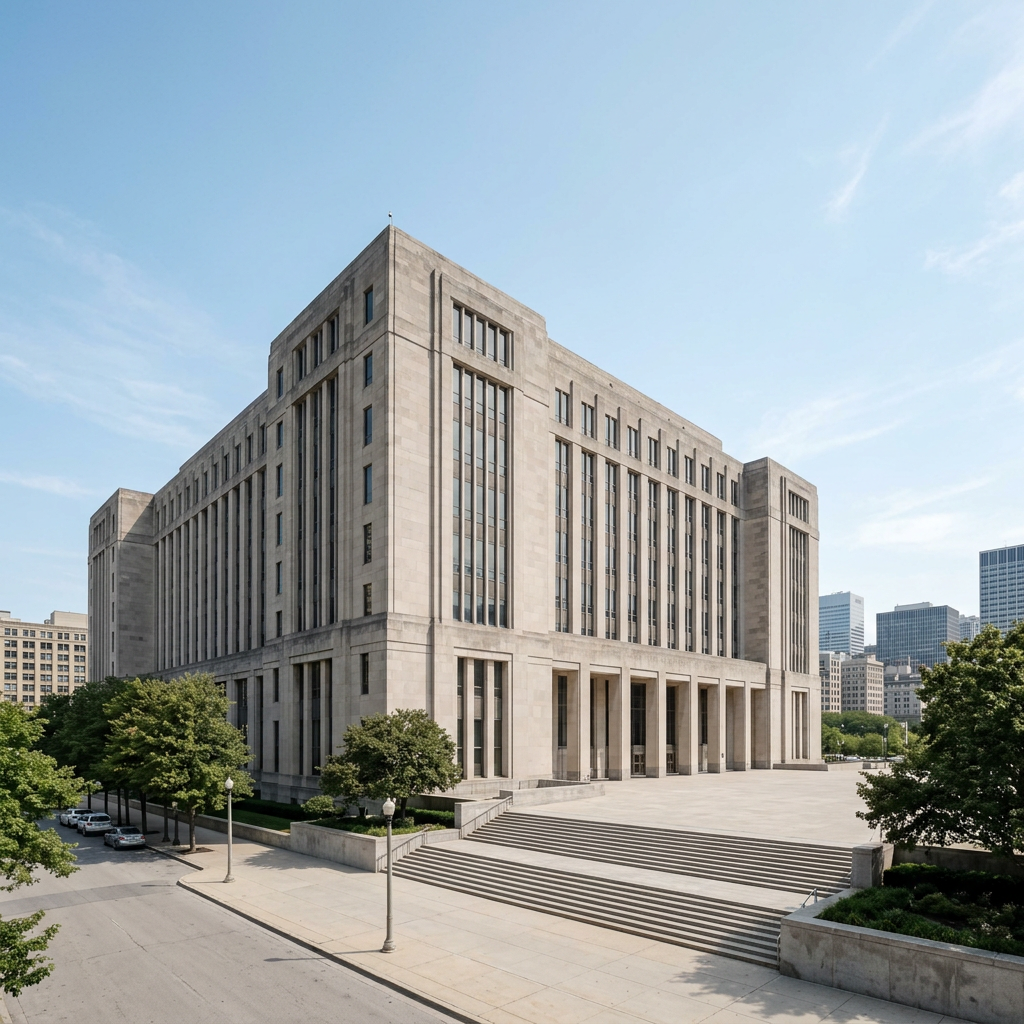
The Circuit Court of Cook County: The Foundation
When someone is arrested in Cook County — whether in Chicago, Evanston, Oak Park, or any of the county's many municipalities — their case enters one of the most expansive court systems in the entire country: the Circuit Court of Cook County.
The Circuit Court is a unified trial court, meaning it handles virtually every type of case filed in the county, from civil disputes to traffic matters to serious criminal charges. Its structure is set out under the Illinois Constitution and the Illinois Court Act (705 ILCS 35/1 et seq.). The court is divided into several departments, but for people facing criminal charges, two are most important:
- The Criminal Division, which handles felony cases
- The Municipal Department, which handles misdemeanor cases through its six district branch courts
The Circuit Court is led by a Chief Judge and a large body of elected judges. Cook County alone accounts for a substantial share of all criminal filings in the state, which is why understanding how it is organized matters enormously if you or a loved one is navigating a charge.
For anyone who wants to look up case information, verify court dates, or understand the court's structure, the official resource is the Clerk of the Circuit Court of Cook County, available at cookcountycourt.org.
The Criminal Division: 26th and California
If you have heard the address "26th and California" mentioned in conversation about serious Chicago crime cases, that is shorthand for the George N. Leighton Criminal Court Building, located at 2650 S. California Avenue in Chicago. This is the home of the Criminal Division of the Circuit Court of Cook County.
Every felony charge arising from an arrest in Chicago — and many from surrounding Cook County communities — is prosecuted here. A felony in Illinois is defined as a crime carrying a potential sentence of more than one year in state prison. Illinois felonies are classified by severity:
- Class 4 felony — the least severe, with a sentencing range of one to three years
- Class 3 felony — two to five years
- Class 2 felony — three to seven years
- Class 1 felony — four to fifteen years
- Class X felony — six to thirty years (non-probationable in most circumstances)
- Murder — carries its own sentencing ranges under 730 ILCS 5/5-4.5
The building at 26th and California houses multiple courtrooms presided over by Circuit Court judges, courtrooms used for bond hearings, grand jury proceedings, pretrial motions, bench trials, and jury trials. It also houses the Cook County Jail complex nearby, which means detained defendants can be transported directly.
The sheer volume of cases processed here makes it one of the busiest felony courthouses in the United States. Judges, prosecutors, defense attorneys, investigators, and social workers all work within this system daily.
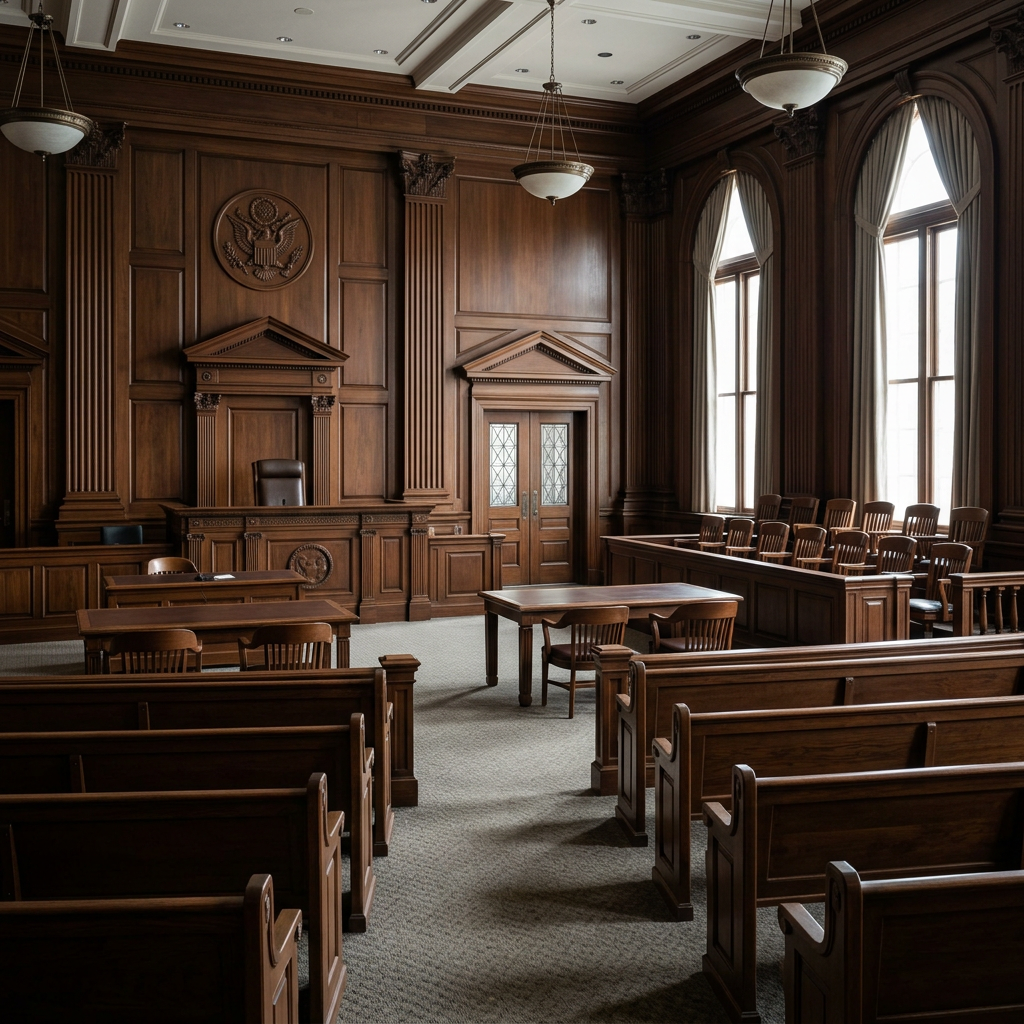
Branch Courts: Where Misdemeanor Cases Are Heard
Not every criminal case in Cook County goes to 26th and California. Misdemeanor charges — crimes carrying a potential sentence of up to one year in the county jail — are handled in the Municipal Department of the Circuit Court, which operates through six district branch courthouses spread across Cook County.
A Class A misdemeanor (the most serious type, such as simple battery or first-offense DUI) can carry up to 364 days in the Cook County Jail and fines. Class B and Class C misdemeanors carry lesser penalties. (See 730 ILCS 5/5-4.5-55 through 5-4.5-65 for the sentencing ranges.)
The six Municipal Department districts cover different geographic portions of Cook County. Two that are frequently referenced:
- Markham Courthouse (District 6) — Located in south suburban Cook County, this court serves many south and southwest suburbs and handles both misdemeanor criminal matters and civil cases arising in that area.
- Bridgeview Courthouse (District 5) — Located in Bridgeview, Illinois, this courthouse serves a broad swath of southwest Cook County suburbs.
Other district courthouses are located in Rolling Meadows (District 2, northwest suburbs), Skokie (District 4, north suburbs), and Maywood (District 1, west suburbs), with the Chicago/First Municipal District also handling misdemeanors from within the city itself.
When a person is arrested on a misdemeanor charge, their case will typically be assigned to the district courthouse that covers the municipality or area where the alleged offense occurred. Understanding which courthouse will handle your case is an important early step, because procedures, calendars, and resources can vary by location.
Traffic and ordinance violations are also handled within this structure, though the procedures differ from criminal misdemeanor prosecution.
The Key Players: State's Attorney and Public Defender
Two offices define the adversarial structure of Cook County criminal prosecution:
The Cook County State's Attorney's Office
The State's Attorney is the elected chief prosecutor for Cook County, responsible for reviewing arrests made by Chicago Police, the Cook County Sheriff's Office, suburban police departments, and other law enforcement agencies, and deciding which charges — if any — to formally file. The office employs hundreds of Assistant State's Attorneys who appear in courtrooms across every courthouse in the county.
The State's Attorney has broad discretion. After an arrest, prosecutors review police reports and evidence and may:
- File charges as presented by police
- Reduce charges to lesser offenses
- Decline to prosecute (a "no paper" decision)
- Present evidence to a grand jury for a felony indictment
You can learn more about the office's structure and programs at cookcountysao.org.
The Cook County Public Defender's Office
The Sixth Amendment to the U.S. Constitution guarantees the right to counsel. For those who cannot afford a private attorney, the Cook County Public Defender provides representation. The Public Defender's Office is one of the largest in the nation and employs experienced attorneys who handle cases at every stage — from bond hearings at 26th and California to misdemeanor trials at Markham or Bridgeview.
At the initial court appearance, a judge will ask whether the defendant has or can afford an attorney. If not, the court will appoint a Public Defender. It is important to understand that Public Defenders are licensed, trained attorneys with real courtroom experience — their caseloads can be heavy, but they are genuine advocates.
Defense Counsel's Role
Whether retained privately or appointed through the Public Defender's Office, defense counsel's job is to hold the government to its burden of proof — beyond a reasonable doubt — and to protect the defendant's constitutional rights at every stage of the proceedings.

How a Case Travels Through the System: Arrest to Sentencing
Understanding the stages of a Cook County criminal case helps demystify a process that can feel overwhelming. Here is a plain-language map of how most cases move through the system:
1. Arrest and Booking
An arrest triggers booking at a police station or, in Chicago, processing through the Chicago Police Department. The defendant's information is recorded, fingerprints are taken, and the Illinois State Police maintains criminal history records. Following booking, the defendant may be held or released, depending on the charge.
2. Bond Hearing
One of the most consequential early moments is the bond hearing, often held within 24 to 48 hours of arrest. A judge sets the conditions of release. Under Public Act 101-0652 (the SAFE-T Act, codified in various sections of the Code of Criminal Procedure, 725 ILCS 5/), Illinois moved away from cash bail for most offenses, replacing it with a detention-or-release framework based on public safety and flight risk. A judge may order release with conditions or order pretrial detention.
3. Felony Charges: Preliminary Hearing or Grand Jury
For felonies, the State must establish probable cause that the defendant committed the charged offense before the case proceeds to trial. This happens one of two ways:
- A preliminary hearing before a judge, where the prosecutor presents evidence and the judge decides whether probable cause exists
- A grand jury proceeding, where a panel of citizens hears evidence and votes on whether to issue an indictment
At 26th and California, grand jury proceedings are common for serious felonies.
4. Arraignment
At arraignment, the defendant is formally read the charges and enters a plea — typically guilty, not guilty, or no contest. In Cook County, most defendants enter a not guilty plea at arraignment, preserving their options while the case continues.
5. Pretrial Motions
This stage is often where skilled defense work has the greatest impact. Defense attorneys may file motions to:
- Suppress illegally obtained evidence (4th Amendment issues)
- Dismiss charges for legal insufficiency
- Challenge eyewitness identification procedures
- Seek discovery of all evidence the State possesses (under Brady v. Maryland principles)
The Circuit Court of Cook County judges rule on these motions, and the outcomes can dramatically shape what evidence is allowed at trial.
6. Plea Negotiations
The reality of the criminal justice system is that many cases resolve through negotiated pleas rather than trial. The State's Attorney's Office may offer a reduced charge or a recommended sentence in exchange for a guilty plea. Whether to accept a plea is always the defendant's decision — and it is one that should be made only after careful consultation with counsel.
7. Trial
If no plea is reached, the case proceeds to trial. The defendant may elect:
- A jury trial (12 jurors for felonies; 6 for misdemeanors) — the jury decides guilt or innocence
- A bench trial — the judge alone decides
The State bears the burden of proving guilt beyond a reasonable doubt. The defendant is not required to testify or present any evidence.
8. Sentencing
If a defendant is found guilty — whether by plea or verdict — the court moves to sentencing. Illinois sentencing is governed by the Unified Code of Corrections (730 ILCS 5/), which sets out ranges for each felony and misdemeanor class. Within those ranges, judges weigh aggravating and mitigating factors. A presentence investigation report (PSI) is often prepared for felony cases. Sentences may include imprisonment, probation, conditional discharge, fines, community service, or a combination.
For the most serious felonies — such as first-degree murder or Class X offenses — sentences are served in Illinois Department of Corrections (IDOC) facilities. For misdemeanors, incarceration is served in the Cook County Jail.
What to Know If You Are Facing Charges in Cook County
Navigating the Cook County criminal court system alone is genuinely difficult. The process involves strict deadlines, complex legal standards, and decisions that can affect the rest of your life. Here are some key practical points:
Assert your rights — but calmly. You have the right to remain silent and the right to an attorney. Politely invoking these rights immediately after arrest — before any questioning — is always appropriate.
Attend every court date. Missing a court appearance in Cook County can result in a bond forfeiture and an arrest warrant being issued. The Clerk of the Circuit Court's website (cookcountycourt.org) allows case lookup so defendants and families can verify court dates.
Understand your charges. The difference between a Class A misdemeanor and a Class 2 felony is significant in terms of potential punishment, collateral consequences (employment, housing, immigration status), and how your case is handled. Make sure you understand exactly what you are charged with under Illinois law.
Collateral consequences matter. A conviction — even for a misdemeanor — can affect professional licenses, public housing eligibility, and immigration status for non-citizens. Illinois law also provides for expungement and sealing of certain records under 20 ILCS 2630/5.2, which may be available after a case concludes.
The Illinois State Police maintains criminal history records. Background checks run by employers and others draw on ISP data. Understanding what is and is not on your record — and what can be cleared — is worth exploring once your case is resolved.
If you have questions about how the system works, the Circuit Court of Cook County's self-help resources and the Illinois courts' public information at illinoiscourts.gov are good starting points. But for guidance specific to your situation, consultation with a licensed Illinois criminal defense attorney is the most important step you can take.
This article is general information only and does not constitute legal advice. Every case is unique, and outcomes depend on the specific facts and law applicable to your situation.
Frequently Asked Questions
The editorial team researches and writes plain-language immigration information, drawing on official government sources and reviewing each page for clarity and accuracy.
Sources & Citations
- [1]Official Government Source: Clerk of the Circuit Court of Cook County — Case Information
- [2]Official Government Source: Cook County State's Attorney's Office
- [3]Official Government Source: Illinois Unified Code of Corrections — Sentencing (730 ILCS 5/)
- [4]Official Government Source: Illinois Code of Criminal Procedure — Pretrial Release (725 ILCS 5/)
- [5]Official Government Source: Illinois Criminal Identification Act — Expungement and Sealing (20 ILCS 2630/5.2)
More criminal defense insights
Insights
Need help with your criminal case?
Our experienced Chicago criminal defense attorneys offer confidential consultations to review your case and outline clear next steps.
Request a Consultation