Felony vs. Misdemeanor Charges in Illinois
In Illinois, criminal offenses are divided into misdemeanors (Class A, B, and C) and felonies (Class 1, 2, 3, 4, and the most serious Class X). The class determines the maximum jail or prison sentence, fines, and long-term consequences like voting rights and employment. Understanding where your charge falls on this scale is the first step toward knowing what is at stake.

The Illinois Offense-Class System at a Glance
Illinois law organizes nearly every criminal charge into a structured tier system. At the bottom are petty offenses and business offenses — things like minor traffic violations — which carry no jail time and are not technically crimes. Above those sit misdemeanors, split into three classes. Above misdemeanors are felonies, split into five classes. Understanding where a charge lands on this ladder shapes almost everything that follows: which courthouse handles your case, how the charge is filed, your right to a jury, and what happens to your life after the case ends.
The governing statute for sentencing ranges is the Unified Code of Corrections, found at 730 ILCS 5/5-4.5-5 through 730 ILCS 5/5-4.5-70. Judges and prosecutors in Cook County work from this same framework every day, but local practice — including the assignment of cases to specific courtrooms at 26th and California (the George N. Leighton Criminal Court Building, the primary felony courthouse for Cook County) or to one of the district courthouses for misdemeanor matters — adds a layer of procedure that affects how quickly a case moves and what diversion options may be available.
Misdemeanors: Class A, B, and C
A misdemeanor is a criminal offense — it goes on your record, it can result in jail time, and it carries real consequences. Illinois law defines three misdemeanor classes:
Class A Misdemeanor This is the most serious misdemeanor. Under 730 ILCS 5/5-4.5-55, a Class A conviction can mean up to 364 days in the county jail (not a state prison) and a fine up to a level set by statute — check the ILCS for the current maximum because fines are updated periodically. Common Class A charges include first-offense domestic battery, simple battery, retail theft of lower-value property, and criminal trespass to a residence.
Class B Misdemeanor A Class B carries a potential jail sentence of up to 180 days under 730 ILCS 5/5-4.5-60. Charges at this level include harassment by telephone and criminal damage to property under a certain dollar threshold.
Class C Misdemeanor The least serious criminal class, a Class C misdemeanor carries up to 30 days in jail under 730 ILCS 5/5-4.5-65. Disorderly conduct and some first-offense minor-in-possession charges may fall here depending on the specific statute.
Practical impact of a misdemeanor Even a Class C can trigger collateral consequences that feel anything but minor:
- Employment: Many employers run background checks and treat any criminal conviction as a red flag.
- Professional licenses: Nurses, teachers, security guards, and others may face licensing board scrutiny.
- Immigration: Non-citizens should be especially careful — even a misdemeanor can affect visa status, green card applications, or naturalization.
- Housing: Private landlords and subsidized housing programs may deny applications based on criminal history.
In Cook County, misdemeanor cases are typically handled at the district courthouses (such as the Rolling Meadows, Markham, Bridgeview, Skokie, or Maywood courthouses) rather than at 26th and California. The Cook County State's Attorney's Office prosecutes these cases, and the Cook County Public Defender represents those who qualify based on income.

Felonies: Classes 1, 2, 3, 4 — and the Fearsome Class X
Felony convictions are served in Illinois Department of Corrections (IDOC) facilities, not county jails, and they carry lasting civil disabilities that misdemeanors generally do not. Here is the breakdown under the Unified Code of Corrections:
Class 4 Felony The lowest felony class, punishable by 1 to 3 years in IDOC (730 ILCS 5/5-4.5-45). Examples include aggravated assault in some circumstances, possession of a controlled substance at lower weights, and driving on a revoked license after prior convictions.
Class 3 Felony Sentencing range: 2 to 5 years in IDOC (730 ILCS 5/5-4.5-40). Aggravated battery causing bodily harm and certain theft amounts can land here.
Class 2 Felony Range: 3 to 7 years in IDOC (730 ILCS 5/5-4.5-35). Residential burglary, aggravated DUI causing great bodily harm, and certain drug charges are examples.
Class 1 Felony Range: 4 to 15 years in IDOC (730 ILCS 5/5-4.5-30). Criminal sexual assault and certain high-weight drug cases often fall here.
Class X Felony The most serious non-murder category in Illinois. A Class X conviction requires a mandatory prison sentence of 6 to 30 years in IDOC — and probation is not available (730 ILCS 5/5-4.5-25). Aggravated criminal sexual assault, armed robbery, and home invasion are among the offenses classified as Class X. Importantly, prior felony convictions can elevate a lesser felony to Class X status through the extended-term sentencing provisions at 730 ILCS 5/5-4.5-95.
Murder stands apart from the class system entirely, with its own statutory sentencing ranges for first-degree and second-degree murder under 720 ILCS 5/9-1 and 720 ILCS 5/9-2.
Collateral consequences unique to felonies
- Loss of voting rights while incarcerated (though Illinois restores voting rights upon release from prison).
- Firearm rights: A felony conviction results in permanent loss of the right to possess firearms under both Illinois and federal law.
- Jury service: Felony convicts may be disqualified from jury duty.
- Public benefits: Certain federal and state benefit programs impose restrictions on those with felony drug convictions.
- FAFSA and student loans: Federal student aid eligibility can be affected for drug felonies.
- Professional licenses: The Illinois Department of Financial and Professional Regulation reviews felony convictions in many licensing decisions.
At the George N. Leighton Criminal Court Building — known colloquially as "26th and Cal" — felony cases are assigned to courtrooms by category. High-profile Class X cases often draw the most experienced prosecutors from the Cook County State's Attorney's Office and may be assigned to dedicated courtrooms.
How Charges Are Filed: Grand Jury vs. Information
One procedural difference that often surprises people is how a felony charge is formally brought versus a misdemeanor charge.
Misdemeanor informations Misdemeanor charges are typically filed by the prosecutor through a document called a criminal information — a formal written accusation signed by the State's Attorney's office. No grand jury is involved.
Felony charges: grand jury indictment or information The Fifth Amendment to the U.S. Constitution requires a grand jury indictment for serious federal crimes, but Illinois state law takes a different approach. Under 725 ILCS 5/111-2, a felony in Illinois may be charged either by:
- Grand jury indictment: A secret proceeding where the State presents evidence to 16 citizens, and at least 12 must find probable cause to return a "true bill" (indictment). The defendant has no right to be present or to cross-examine witnesses.
- Criminal information: The prosecutor files the charge directly without a grand jury, but only after a preliminary hearing in open court where a judge determines there is probable cause.
In Cook County, grand juries are regularly impaneled. The Cook County State's Attorney decides in each case whether to present the matter to a grand jury or to proceed by information after a preliminary hearing. For high-profile or complex cases — particularly those involving public corruption, organized crime, or major narcotics conspiracies — grand jury indictments are common because they allow the State to develop the case and subpoena witnesses before any public hearing.
For defendants, the practical difference is significant. A preliminary hearing is an opportunity for the defense to hear some of the State's evidence, cross-examine witnesses, and potentially challenge probable cause in open court. When the State bypasses this by going to a grand jury, that opportunity is lost until later stages of the case.
Jury Trial Rights and the Plea Bargain Crossroads
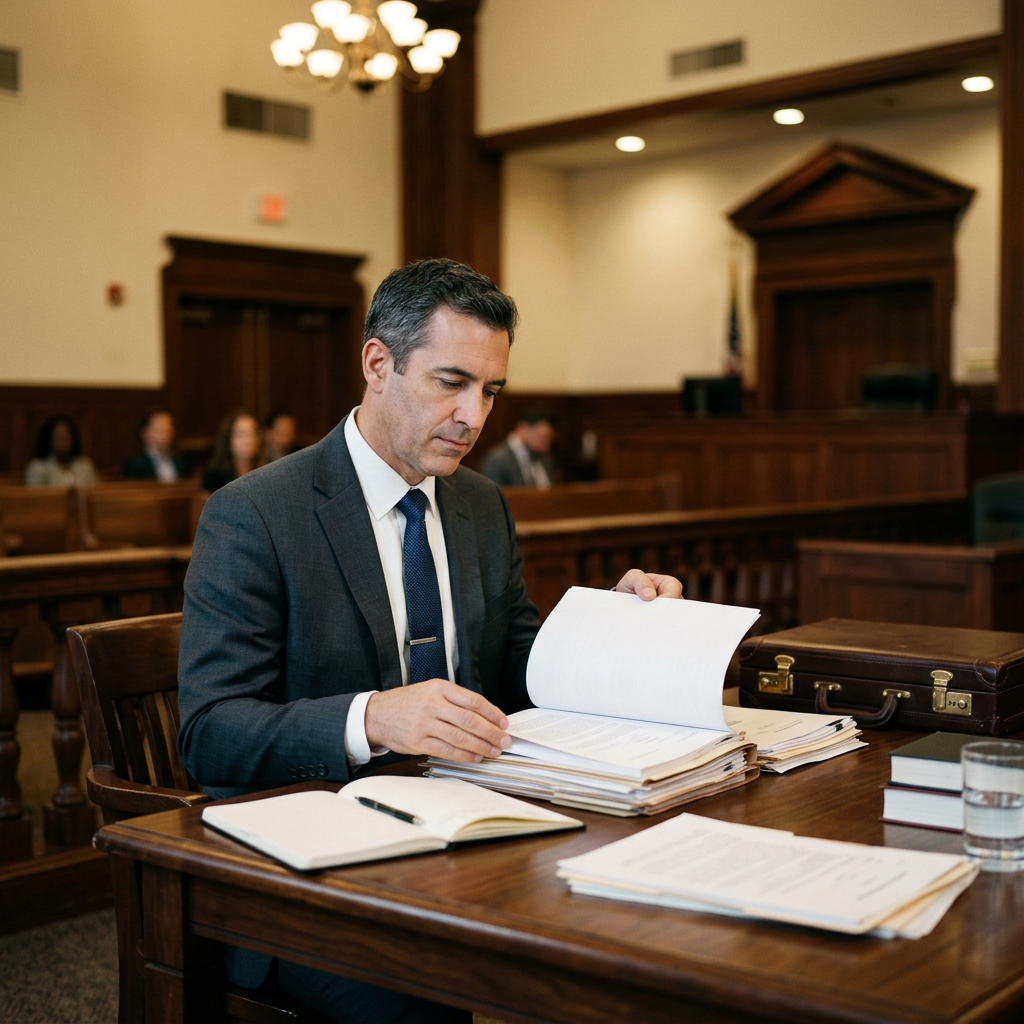
Your right to a jury trial Under the Illinois Constitution (Article I, Section 13) and the U.S. Constitution's Sixth Amendment, any defendant facing potential imprisonment has the right to a jury trial. In Illinois:
- Felony cases: Juries consist of 12 persons, and a verdict must be unanimous.
- Misdemeanor cases punishable by more than 6 months: Also 12 jurors under Illinois law.
- Petty offenses and certain low-level matters: No jury right.
A defendant may also waive the right to a jury and elect a bench trial — where the judge alone decides guilt. Bench trials are not uncommon at 26th and California, where experienced defense attorneys sometimes prefer a judge's legal reasoning over jury unpredictability, particularly in complex or technical cases.
How plea bargains move cases across the class lines One of the most important — and least understood — aspects of Illinois criminal practice is the way plea negotiations can shift the formal classification of a charge. Common scenarios include:
- Charge reduction: A defendant charged with a Class 1 felony (criminal sexual assault) may negotiate a plea to a Class 2 or Class 3 felony, reducing the sentencing exposure and potentially preserving eligibility for probation.
- Felony to misdemeanor: In some cases, particularly for first-time offenders charged with lower-level Class 4 felonies, the State may offer to reduce the charge to a Class A misdemeanor in exchange for a guilty plea and conditions like restitution or community service. This is sometimes called "pleading down."
- Supervision or probation in lieu of conviction: Illinois law allows courts to impose supervision for certain misdemeanors under 730 ILCS 5/5-6-1. Supervision, if successfully completed, does not result in a conviction on the record — an important distinction for background check purposes.
- TASC Probation and Diversion Programs: Cook County has several diversion programs — including drug treatment alternatives — that can route defendants away from conviction entirely. The Cook County State's Attorney's Office maintains information on its diversion initiatives on its official website.
Plea bargaining is not an admission of weakness. It is a strategic decision that requires careful analysis of the evidence, the sentencing ranges involved, the specific judge assigned, and the long-term collateral consequences of a conviction at any given class level. These are the conversations that happen in the hallways and conference rooms of Cook County courthouses every single day.
Why class matters for probation eligibility Not every class allows probation. In general:
- Misdemeanors: Probation is available and common.
- Class 4, 3, 2, 1 felonies: Probation is generally available unless the specific statute or prior record bars it.
- Class X felonies: Probation is expressly prohibited by statute. A judge cannot grant probation no matter what mitigation is presented.
This makes the difference between a Class 1 and a Class X charge potentially the difference between staying in the community and going to IDOC.
What to Do If You Are Facing Charges in Cook County
Understanding the class system is useful, but applying it to your specific situation requires knowledge of the individual statute you are charged under, your prior criminal history, the strength of the State's evidence, and the realistic options available in the courthouse where your case is pending.
Key steps to take immediately:
- Invoke your right to remain silent. Whether you are questioned by Chicago Police Department officers or Cook County Sheriff's deputies, you have the right under the Fifth Amendment and Miranda v. Arizona to refuse to answer questions without counsel present.
- Request an attorney. If you cannot afford one, you have the right to a court-appointed attorney. In Cook County, the Cook County Public Defender's Office is one of the largest public defender offices in the country and represents the majority of defendants at 26th and California.
- Understand your bond. In Cook County, bail and pretrial detention are governed by Illinois's Pretrial Fairness Act (effective September 18, 2023), which eliminated cash bail for most offenses. Whether you are detained before trial now depends on a judicial finding about danger or flight risk, not your ability to pay. Check the Illinois Courts website for updated guidance on the new pretrial system.
- Gather documentation. Employment records, medical records, character references, and prior court dispositions can all affect how a case is resolved, from initial charging decisions through sentencing.
- Do not discuss your case on social media or with anyone other than your attorney. Statements made to friends, family, or online can be and are used by prosecutors.
Illinois's offense-class system exists to create proportionality — to match the severity of punishment to the severity of the conduct. But the system is complex, and where a charge lands on the ladder is not always as fixed as it might appear at arrest. Classes can shift through charging decisions, motions, and negotiations. That is precisely why understanding the framework — and getting knowledgeable counsel early — matters so much.
This article is for general informational purposes only and does not constitute legal advice. Every case is different. If you or a loved one is facing criminal charges in Illinois, consult a licensed Illinois criminal defense attorney as soon as possible.
Frequently Asked Questions
The editorial team researches and writes plain-language immigration information, drawing on official government sources and reviewing each page for clarity and accuracy.
Sources & Citations
- [1]Official Government Source: 730 ILCS 5/ — Unified Code of Corrections (Sentencing Classes)
- [2]Official Government Source: 725 ILCS 5/111-2 — How Criminal Charges Are Filed in Illinois
- [3]Official Government Source: Cook County State's Attorney's Office — Official Site
- [4]Official Government Source: Illinois Courts — Pretrial Fairness Act Information
- [5]Official Government Source: Illinois Department of Corrections — Official Site
More criminal defense insights
Insights

Need help with your criminal case?
Our experienced Chicago criminal defense attorneys offer confidential consultations to review your case and outline clear next steps.
Request a Consultation