Illinois DUI Penalties: First, Second, and Felony Offenses
In Illinois, a first DUI conviction is typically a Class A misdemeanor carrying up to 364 days in jail and fines, plus a mandatory license revocation. A second offense raises the stakes significantly, and certain aggravating factors — including prior convictions, a crash causing injury, or a child in the vehicle — can elevate a DUI to a felony. Understanding this escalating structure is the first step toward protecting your rights.

How Illinois Defines DUI — and Why the Charge Level Matters
Illinois law prohibits operating a motor vehicle while impaired by alcohol, drugs, or any intoxicating compound. The core statute, 625 ILCS 5/11-501, sets the legal limit at a blood-alcohol concentration (BAC) of 0.08 or higher for most drivers, 0.04 for commercial vehicle operators, and zero tolerance for drivers under 21. Impairment by cannabis, controlled substances, or a combination of substances is also covered, regardless of BAC.
Why does the charge level matter? Because in Illinois, the difference between a misdemeanor DUI and a felony DUI is not just a matter of vocabulary — it determines whether you face county jail or state prison, how long your driving privileges are revoked, and whether you will carry a felony record for the rest of your life. Employers, landlords, and professional licensing boards treat those two categories very differently.
Every DUI prosecution in Illinois also triggers a separate, civil administrative action by the Secretary of State's office against your driving privileges. That process runs parallel to the criminal case and has its own deadlines. Missing those deadlines — often as short as a few days after arrest — can cost you important options, so prompt attention to both tracks is essential.
First-Offense DUI: Class A Misdemeanor Penalties
For most people charged with DUI for the first time, the offense is classified as a Class A misdemeanor under Illinois law. A Class A misdemeanor carries a maximum of 364 days in jail and a fine up to $2,500, though the court may also impose court costs, mandatory assessments, and program fees on top of the base fine. Because these add-ons can significantly increase the total amount owed, you should ask the clerk of the Circuit Court of Cook County — or whatever county courthouse handles your case — for a current schedule of assessments.
Mandatory minimums matter here. Even a first offense can carry mandatory minimum consequences that a judge cannot waive:
- Supervision is not available if your BAC was 0.16 or higher, if a minor under 16 was in the vehicle, or if you caused an accident resulting in injury — a form of court supervision that keeps the conviction off your record is simply off the table in those situations.
- A minimum of 100 hours of community service is required if your BAC was 0.16 or higher.
- A mandatory minimum fine (confirm the current amount with the Illinois Secretary of State or court clerk) applies in high-BAC cases.
- If a passenger under age 16 was present, the charge may be elevated to an aggravated DUI even on a first offense (discussed below).
License revocation is automatic on a first conviction: a one-year revocation of your driving privileges. Note that revocation is different from suspension — a revoked license does not automatically return after the revocation period ends. You must apply to the Secretary of State for reinstatement, pass a hearing, and satisfy all requirements before you can legally drive again.
Additionally, Illinois imposes a Statutory Summary Suspension the moment you are arrested for DUI. If you submit to chemical testing and register a BAC of 0.08 or higher, your license is automatically suspended for a set period beginning 46 days after the arrest notice. If you refuse testing, the suspension period is longer. These are administrative penalties that apply even before any court conviction.

Second Offense and Escalating Consequences
Illinois takes a strict look-back approach to DUI. A second DUI conviction — regardless of how many years have passed since the first — still counts as a second offense and brings significantly harsher consequences.
A second offense remains a Class A misdemeanor in many situations, but the mandatory minimums escalate sharply:
- A mandatory minimum of five days in jail or 240 hours of community service.
- A five-year revocation of driving privileges if the second conviction occurs within 20 years of the first.
- Higher mandatory fines and assessment amounts — confirm current figures with the Illinois Secretary of State's office or your county court clerk.
- Mandatory drug and alcohol evaluation and treatment, the scope of which is determined by a licensed evaluator.
Perhaps most critically, a second DUI conviction triggers mandatory ignition interlock device requirements, even during any period of restricted driving privileges. This means you cannot simply pay fines and move on — your path back to independent driving is structured and supervised.
Cook County sees a large volume of repeat DUI cases. The Cook County State's Attorney's office treats second and subsequent offenses seriously, and prosecutors often pursue sentences toward the upper end of the allowable range. If you are facing a second charge in the Circuit Court of Cook County — whether at the main criminal courthouse at 26th and California or at one of the suburban district courthouses — understanding the mandatory minimums specific to your case is critical before making any decisions about how to proceed.
When DUI Becomes a Felony: Aggravating Factors
Illinois law identifies a range of circumstances that elevate a DUI from a misdemeanor to a felony, often called Aggravated DUI under 625 ILCS 5/11-501(d). Felony DUI convictions result in state prison sentences (served in an Illinois Department of Corrections facility, not county jail), longer revocation periods, and a permanent felony record.
Key aggravating factors that can trigger felony DUI charges include:
- Third or subsequent offense: A third DUI conviction is a Class 2 felony, carrying two to seven years in the Illinois Department of Corrections. A fourth offense is a Class 2 felony as well, but with a mandatory prison sentence. A fifth offense rises to a Class 1 felony, and a sixth or subsequent offense becomes a Class X felony — the most serious non-murder felony classification in Illinois, carrying six to 30 years in prison with no possibility of probation.
- Accident causing great bodily harm or permanent disability: If your driving under the influence causes an accident that results in serious injury to another person, the charge can become a Class 4 felony on a first offense, and escalates further with prior convictions.
- Accident causing death: DUI resulting in death is charged as a Class 2 felony (Aggravated DUI) carrying three to fourteen years in prison per victim. If two or more people are killed, courts may impose consecutive sentences.
- Child passenger under age 16: Transporting a minor under 16 while driving under the influence is an aggravated DUI regardless of whether this is a first offense. The classification depends on whether injury results.
- School bus or other special circumstances: Driving a school bus, operating a vehicle for hire, or driving in a school zone can also trigger the aggravated classification.
- No valid license or insurance at the time of the offense: These factors can elevate the offense level or remove eligibility for certain sentencing alternatives.
- Prior reckless homicide conviction: A prior conviction for reckless homicide or aggravated DUI involving death makes any subsequent DUI a Class X felony.
If you are facing an aggravated DUI allegation in Illinois, the stakes are fundamentally different from a standard misdemeanor case. Felony convictions affect voting rights during incarceration, employment opportunities, professional licenses, and housing. The Illinois Department of Corrections handles felony sentences, and early release timelines depend on the specific felony class and any mandatory service requirements.
License Revocation, MDDP, and the BAIID Program
One of the most immediate, practical impacts of a DUI conviction in Illinois is the loss of your driving privileges. Understanding the difference between a suspension and a revocation is essential:
- A suspension is temporary and ends automatically after a defined period — but you may still need to pay a reinstatement fee and provide proof of insurance.
- A revocation has no automatic end date. It requires you to formally apply for reinstatement through a Secretary of State formal hearing or an informal hearing (depending on your history), pay applicable fees, demonstrate rehabilitation, and often install a Breath Alcohol Ignition Interlock Device (BAIID).
Revocation timelines by offense (confirm current periods with the Illinois Secretary of State):
| Offense | Minimum Revocation Period |
|---|---|
| First conviction | 1 year |
| Second conviction within 20 years | 5 years |
| Third conviction | 10 years |
| Fourth or subsequent conviction | Lifetime (with possible relief after 5 years) |
Always verify current revocation periods at the Illinois Secretary of State's official website, as the legislature can amend these timelines.
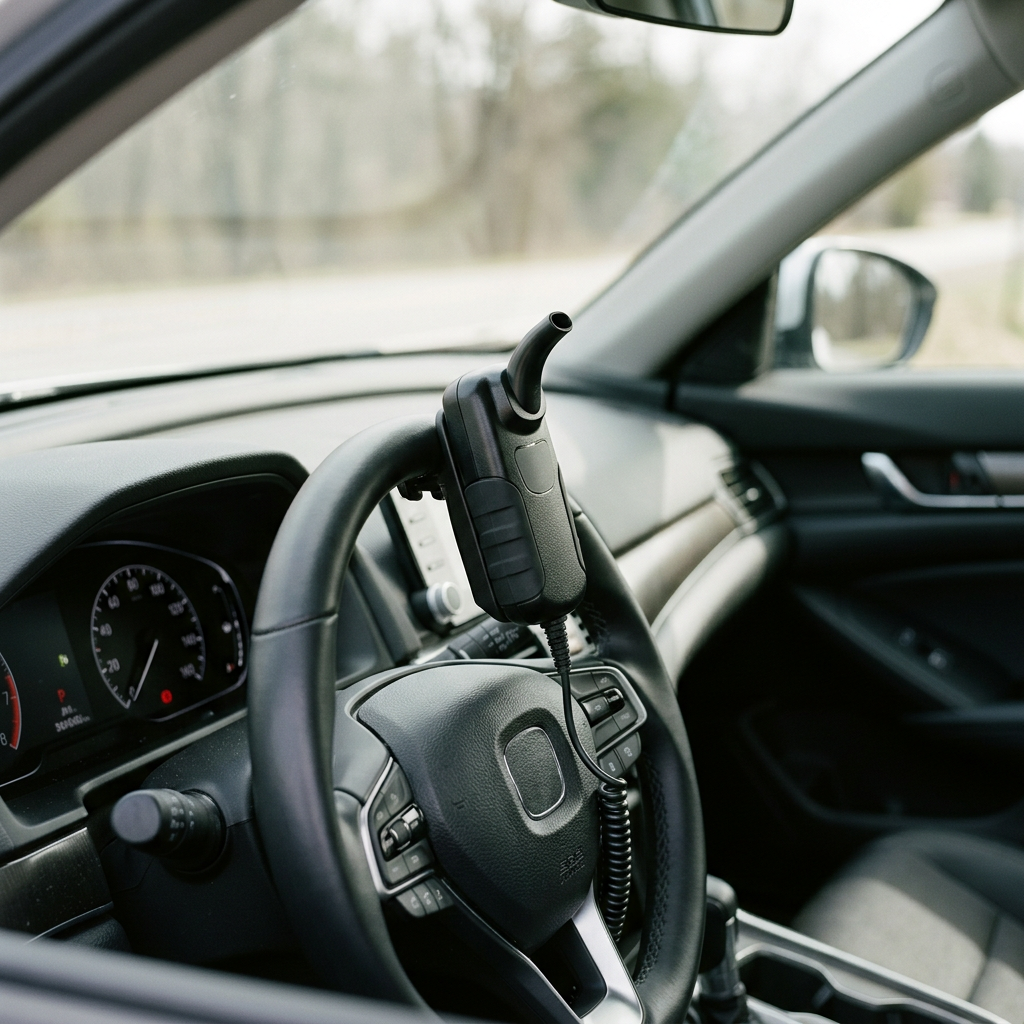
The Monitoring Device Driving Permit (MDDP) allows most first-time DUI offenders to drive throughout the entire Statutory Summary Suspension period — but only in a vehicle equipped with a BAIID. The BAIID measures your BAC before you start the vehicle and at random intervals while driving. If alcohol is detected above a very low threshold, the device logs the event and may prevent the vehicle from starting.
To obtain an MDDP, you must apply through the Illinois Secretary of State, pay applicable fees (check the current schedule at ilsos.gov), and have the BAIID professionally installed by an approved vendor. All data from the device is transmitted to the Illinois Secretary of State for monitoring.
For those seeking reinstatement after revocation, the path involves:
- Completing a drug and alcohol evaluation by a licensed evaluator.
- Completing any recommended treatment or education programs.
- Attending a Secretary of State hearing (formal or informal, depending on the number of offenses).
- Providing proof of financial responsibility (SR-22 insurance) for a required period.
- Installing a BAIID for a required period after reinstatement, if mandated.
The Illinois Secretary of State's office — which administers driver's licenses statewide, including for Cook County residents — conducts these hearings at facilities across the state. Chicago-area residents often schedule hearings at the downtown Chicago facility, though wait times and scheduling vary. Check the current schedule and requirements directly at ilsos.gov.
What to Do After a DUI Arrest in Illinois
A DUI arrest sets multiple legal clocks in motion simultaneously. The administrative suspension of your license can begin as few as 46 days after your arrest notice, and the window to request a hearing to contest that suspension is limited. Missing these early deadlines can reduce your options significantly, even before the criminal case ever goes to court.
Steps that matter in the days immediately after a DUI arrest:
- Document everything you remember about the stop, the field sobriety tests, any chemical testing, and what officers said to you. Details fade quickly.
- Understand your court date. In Cook County, initial appearances and arraignments are scheduled through the Circuit Court of Cook County. The case may be heard at the main courthouse at 26th Street and California Avenue in Chicago or at a suburban district court, depending on where the arrest occurred. Check your paperwork carefully.
- Look into legal representation. If you cannot afford a private attorney, the Cook County Public Defender's office represents eligible defendants in DUI cases. You can request a public defender at your first court appearance.
- Do not drive on a suspended or revoked license. Driving on a suspended license after a DUI arrest is a separate criminal offense and can make your situation considerably worse.
- Begin the MDDP process early if you are eligible. If you are a first-time offender and want to continue driving during the Statutory Summary Suspension, the application process takes time. Starting early improves your chances of having the permit in place before the suspension kicks in.
General information is not a substitute for legal advice specific to your situation. Every DUI case involves unique facts — the nature of the stop, the testing methods used, prior history, and other variables — that can significantly affect available options and outcomes. This article is intended to help you understand the general framework of Illinois DUI law, not to predict or guarantee any result in your case.
For official information on Illinois DUI law, license revocation, reinstatement, and the BAIID program, consult the resources listed in the citations below.
Frequently Asked Questions
The editorial team researches and writes plain-language immigration information, drawing on official government sources and reviewing each page for clarity and accuracy.
Sources & Citations
- [1]Official Government Source: Illinois Compiled Statutes — DUI Statute (625 ILCS 5/11-501), Illinois General Assembly
- [2]Official Government Source: Illinois Secretary of State — DUI Information and Reinstatement
- [3]Official Government Source: Illinois Secretary of State — Breath Alcohol Ignition Interlock Device (BAIID) Program
- [4]Official Government Source: Circuit Court of Cook County — Criminal Division
- [5]Official Government Source: Illinois Department of Corrections — Sentencing Information
More criminal defense insights
Insights


Need help with your criminal case?
Our experienced Chicago criminal defense attorneys offer confidential consultations to review your case and outline clear next steps.
Request a Consultation