Resisting Arrest and Obstruction Charges in Illinois
In Illinois, resisting or obstructing a peace officer is a Class A misdemeanor under 720 ILCS 5/31-1, but it escalates to a felony if an officer is injured. 'Resistance' means active physical opposition — not simply refusing to answer questions or asserting your rights. Prosecutors in Cook County frequently add this charge alongside other offenses, making it critical to understand exactly what the law does and does not prohibit.

The Illinois Law Behind the Charge
Illinois defines the offense of resisting or obstructing a peace officer under 720 ILCS 5/31-1. The statute makes it unlawful to knowingly resist or obstruct the performance of any authorized act by a peace officer, firefighter, or correctional officer. That language — "knowingly" and "authorized act" — carries significant legal weight and shapes how these cases are defended.
At its base level, resisting or obstructing a peace officer is a Class A misdemeanor, the most serious category of misdemeanor in Illinois. A Class A misdemeanor carries potential penalties of up to 364 days in county jail and a fine, though actual sentences vary widely based on the circumstances, the individual's background, and how the case is resolved. For current fine amounts and court costs, check the official Illinois General Assembly website at ilga.gov, because those figures change periodically.
The charge escalates significantly when the resistance causes injury to the officer:
- Class 4 felony if the officer suffers any bodily harm during the encounter
- Class 3 felony if the officer suffers great bodily harm or permanent disability or disfigurement
These felony enhancements transform what might seem like a minor skirmish into a serious criminal matter with potential prison time rather than county jail. Illinois Department of Corrections sentencing ranges for Class 3 and Class 4 felonies can be reviewed at idoc.illinois.gov.
One key element prosecutors must prove is that the peace officer was performing an authorized act at the time of the alleged resistance. This is not a technicality — it is a substantive legal requirement. Courts have interpreted "authorized act" broadly, but it remains a genuine element of the offense that the State bears the burden of proving beyond a reasonable doubt.
What Counts as 'Resistance' — and What Doesn't
One of the most misunderstood aspects of this charge is what actually qualifies as "resistance" under Illinois law. Many people assume that anything less than complete, immediate compliance with an officer's commands exposes them to criminal liability. That assumption is incorrect, and understanding the distinction can matter enormously.
Active physical resistance is the core of the offense. Illinois courts have generally found that resistance requires some form of physical opposition — pulling away, pushing, struggling, fleeing on foot after a lawful stop, or physically blocking an officer from carrying out a lawful duty. The person must knowingly take an action that impedes the officer.
Passive non-compliance is different. Going limp, refusing to move your arms to be handcuffed while not otherwise struggling, or simply standing still has been treated inconsistently by courts — making the exact facts of each situation critically important.
Lawful verbal refusals are not criminal resistance. You have a constitutional right to decline to answer questions. Saying "I don't want to speak without an attorney" or "I'm not going to answer that" is not obstruction. Silence alone cannot form the basis of a resisting-arrest charge.
Asserting your rights verbally is protected conduct. Telling an officer you believe a stop is unlawful, asking why you are being detained, or verbally objecting to a search is not obstruction — provided you do not physically interfere. Courts have repeatedly recognized a distinction between protected verbal activity and unlawful physical resistance.
Recording police in public is not obstruction. Illinois law protects the right of bystanders and individuals to record police performing their duties in public spaces, so long as the recording does not physically interfere with the officer. The Illinois eavesdropping statute, which previously criminalized such recordings, was struck down, and recording officers in public has been consistently upheld.
The practical boundary, then, runs between words and actions. Speaking, asking, refusing to answer, or recording generally falls on the protected side. Physical interference — even minor — can cross into criminal territory. Because that line is often disputed in real cases, the specific facts, including body camera footage, witness accounts, and police reports, become central to any defense.
Your Rights During an Unlawful Arrest
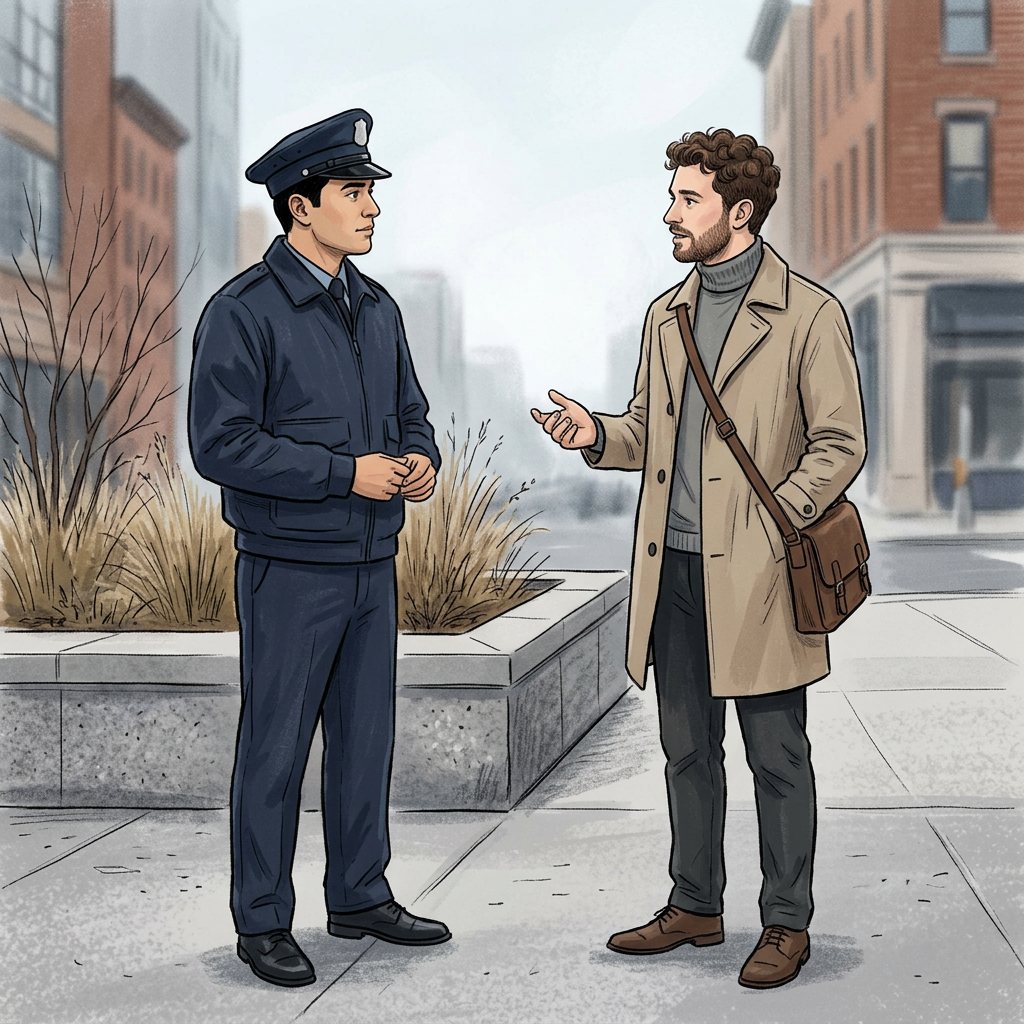
Perhaps the most counterintuitive aspect of Illinois law on this topic is that even an unlawful arrest does not give you the right to physically resist. This is not unique to Illinois — it reflects a legal doctrine adopted across most U.S. jurisdictions.
Under Illinois law and the weight of case authority, a person may not use physical force to resist an arrest, even one that turns out to be legally unjustified. The rationale behind this rule is practical: courts, not streets, are the place to contest the legality of an arrest. Physical resistance in the moment creates danger for everyone involved and can turn a wrongful-arrest situation into a violent one.
What this means for you: If an officer arrests you and you believe the arrest is unlawful, your legal remedies are:
- Comply physically and contest the arrest in court
- Invoke your right to remain silent immediately and clearly
- Request an attorney and say nothing further until you have one
- Document injuries or misconduct as soon as possible after release
- File a formal complaint with the Civilian Office of Police Accountability (COPA) in Chicago or the appropriate oversight body in your municipality if the officer used excessive force
Illinois courts have made clear that the appropriate remedy for an unlawful arrest is suppression of evidence, dismissal of charges, or civil litigation — not physical confrontation at the scene. An attorney can file a motion to suppress evidence obtained through an unlawful stop or arrest, which in many Cook County cases is the single most powerful legal tool available.
At the same time, you retain significant rights even during an arrest:
- The right to remain silent (Fifth Amendment and Illinois law)
- The right to an attorney before questioning (Sixth Amendment)
- The right to be free from excessive force — an officer's authority to arrest does not include the right to use unreasonable force, and excessive force by an officer may form the basis of a civil rights claim even if the underlying arrest was lawful
- The right to observe and remember everything that happens so you can accurately relay it to your attorney later
These rights do not disappear because you are in handcuffs. Exercising them calmly and clearly — rather than physically — is both legally sound and practically safer.
How Chicago-Area Prosecutors Use This Charge
In Cook County, resisting or obstructing a peace officer charges appear with striking regularity not as standalone offenses but as add-on charges alongside other allegations. Understanding this pattern helps people recognize why this charge surfaces so often and what it means for their case.
The Cook County State's Attorney's Office, which handles felony and misdemeanor prosecutions arising from Chicago Police Department arrests and arrests by other law enforcement agencies operating in the county, routinely files resisting charges when an arrest involved any physical struggle, flight, or disputed compliance. From a prosecutorial strategy standpoint, the charge serves several purposes:
- It creates negotiating leverage. A defendant facing a primary charge plus a resisting charge has more reason to consider a plea to the primary offense in exchange for dismissal of the resisting count.
- It supports the officer's account. If a defendant claims an officer used unnecessary force, having a resisting charge on the record complicates that narrative.
- It is relatively easy to charge. An officer's sworn complaint describing physical resistance is often sufficient to initiate the charge, placing the burden on the defense to challenge it.
At the Circuit Court of Cook County — the court at 26th Street and California Avenue that handles felony cases, and the branch courts across the county that handle misdemeanors — defense attorneys frequently challenge resisting charges by requesting body-worn camera footage, seeking dash camera recordings, and obtaining any available witness statements. Cook County has expanded its body camera program significantly, and that footage often tells a very different story than a police report alone.
It is also worth noting that in some situations, what an officer describes as resistance in a report reflects the officer's perspective on a chaotic moment — a perspective that may not align with what cameras, witnesses, or physical evidence show. Challenging the factual basis of the charge is often a viable defense strategy.
For anyone arrested in Chicago or the surrounding Cook County municipalities, one of the first questions an attorney will ask is whether a resisting charge was added and what evidence supports or undermines it. The answer can significantly shape the overall strategy for the case.
Potential Consequences and Collateral Effects
A conviction for resisting or obstructing a peace officer — even at the misdemeanor level — carries consequences that extend well beyond any jail time or fine.
Criminal record impact. A Class A misdemeanor conviction creates a permanent criminal record in Illinois unless and until it is expunged or sealed. Illinois law limits eligibility for expungement based on the nature of the offense and the outcome of the case. Arrests that do not result in conviction are generally more straightforwardly expungable. The Illinois State Police maintains the state's criminal history records; information on expungement eligibility is available at isp.illinois.gov.
Employment consequences. Many employers conduct background checks. A conviction for an offense involving law enforcement can raise concerns, particularly for jobs requiring professional licensure, security clearance, or work with vulnerable populations.
Immigration consequences. For non-citizens, any criminal conviction carries potential immigration consequences that can be severe and permanent. Even a misdemeanor conviction may be relevant to immigration proceedings. Non-citizen defendants should ensure their attorney understands the potential immigration implications before any plea is entered.
Professional licensing. Illinois professional licensing boards — for fields like nursing, teaching, real estate, and many others — require disclosure of criminal convictions and have authority to deny, suspend, or revoke licenses based on criminal history.
Felony consequences. If the charge escalates to a felony due to officer injury, the consequences become dramatically more serious: potential prison time, loss of voting rights while incarcerated, loss of the right to possess firearms, and far greater barriers to employment, housing, and professional licensing.
Given these stakes, even a "minor" resisting charge deserves serious legal attention. Options that may be available depending on the circumstances include negotiating for a reduction or dismissal, seeking a disposition that avoids a conviction on the record, or fighting the charge at trial if the evidence supports that approach. The Cook County Public Defender's Office provides representation to those who qualify financially and handles a substantial volume of these cases in Chicago-area courts.
What to Do If You're Facing This Charge
If you or someone you care about is facing a resisting or obstructing charge in Illinois — whether as the only charge or alongside others — there are concrete steps that can protect your legal position from the very beginning.
At the moment of arrest:
- Stay as calm as possible. Verbal objection to an officer's actions is generally protected; physical resistance is not.
- Clearly and calmly state: "I am invoking my right to remain silent and I want an attorney."
- Do not attempt to explain your side of the story to the officer. That conversation is for your attorney and, if necessary, a courtroom.
- Observe and try to remember details: officer names and badge numbers, the location, any witnesses present, and the sequence of events.
After the arrest:
- As soon as possible, write down everything you remember while it is fresh.
- If you were injured during the arrest, seek medical attention and document your injuries with photographs.
- Preserve any evidence you have access to: receipts, phone records, or other materials that establish where you were or what you were doing.
- Contact the Cook County Public Defender if you cannot afford private counsel, or speak with a criminal defense attorney as quickly as possible.
During the case:
- Request that your attorney obtain all body camera footage promptly. In many Illinois jurisdictions, footage is subject to retention schedules, and delays in requesting it can sometimes result in recordings being unavailable.
- Ask about the specific factual and legal basis for the resisting charge and what evidence the State has to support it.
- Understand all of your options, including whether a motion to dismiss or suppress may be appropriate, whether negotiating a favorable resolution makes sense, or whether the facts support going to trial.
This article provides general information about Illinois law and is not a substitute for legal advice tailored to your specific situation. The law is complex, facts matter enormously in these cases, and the right strategy depends on circumstances unique to each individual.
Frequently Asked Questions
The editorial team researches and writes plain-language immigration information, drawing on official government sources and reviewing each page for clarity and accuracy.
Sources & Citations
- [1]Official Government Source: 720 ILCS 5/31-1 — Resisting or Obstructing a Peace Officer (Illinois General Assembly)
- [2]Official Government Source: Illinois Criminal History Records & Expungement — Illinois State Police
- [3]Official Government Source: Circuit Court of Cook County — Criminal Division
- [4]Official Government Source: Cook County State's Attorney — Criminal Prosecutions
- [5]Official Government Source: Illinois Department of Corrections — Sentencing and Commitment
More criminal defense insights
Insights
Need help with your criminal case?
Our experienced Chicago criminal defense attorneys offer confidential consultations to review your case and outline clear next steps.
Request a Consultation