Sex Offender Registration in Illinois: Who Must Register
Illinois law requires anyone convicted of a qualifying sex offense to register with local law enforcement under the Illinois Sex Offender Registration Act. Registration lasts either 10 years or a lifetime depending on the offense. Registrants must report their address, employer, school enrollment, and online identifiers, and they face strict limits on where they can live and travel. Failing to register is itself a felony.

What Is the Illinois Sex Offender Registration Act?
The Illinois Sex Offender Registration Act (SORA), codified at 730 ILCS 150, is the state law that creates and governs the sex offender registry. It sets out which offenses require registration, how long registration lasts, what information registrants must provide, and what restrictions follow them in daily life.
The law is administered at the local level — meaning registrants must report in person to the law enforcement agency that covers the jurisdiction where they live, work, or attend school. In Chicago and unincorporated Cook County, that primary point of contact is the Chicago Police Department or the Cook County Sheriff's Office, respectively. The Illinois State Police then maintains a statewide public database that anyone can search online at isp.illinois.gov.
SORA was designed to give law enforcement and the public information about the whereabouts of people convicted of sex offenses. It is a civil regulatory scheme, meaning registration itself is not a criminal punishment — but violating it absolutely is. Understanding the Act's requirements is essential for any registrant, and for family members trying to help a loved one comply.
Which Offenses Trigger Registration?
Not every sex-related charge leads to mandatory registration. The Act lists triggering offenses specifically. The most common include:
- Criminal sexual assault (720 ILCS 5/11-1.20)
- Aggravated criminal sexual assault (720 ILCS 5/11-1.30)
- Predatory criminal sexual assault of a child (720 ILCS 5/11-1.40)
- Criminal sexual abuse and aggravated criminal sexual abuse (720 ILCS 5/11-1.50 and 5/11-1.60)
- Indecent solicitation of a child (720 ILCS 5/11-6)
- Sexual exploitation of a child (720 ILCS 5/11-9.1)
- Child pornography offenses (720 ILCS 5/11-20.1)
- Grooming (720 ILCS 5/11-25)
- Traveling to meet a minor (720 ILCS 5/11-26)
- Public indecency committed in the presence of a minor (720 ILCS 5/11-9) under certain circumstances
- Kidnapping or unlawful restraint of a minor when the conviction is accompanied by a sexual motivation finding
Registration is also required for individuals who were adjudicated as sexually dangerous persons or sexually violent persons under separate Illinois statutes, and for anyone who was required to register in another state when they move to Illinois. The Act also covers certain federal convictions and military convictions that qualify under comparable federal law.
It is important to review the full list at 730 ILCS 150/2 with an attorney, because the statutory definition of a "sex offender" under SORA is broader than many people expect, and amendments to the Act have added offenses over the years. An offense that did not trigger registration when it was committed may still require registration if the conviction happened after an amendment took effect.

10-Year Registration vs. Lifetime Registration
Once registration is required, the duration depends on the nature of the offense and the registrant's history.
10-Year Registration
Most registrants who were convicted of a single non-violent qualifying offense — and who have not been classified as a sexually violent person — are required to register for 10 years from the date of conviction or release from custody, whichever is later. During this period, every obligation described below applies fully.
Lifetime Registration
Lifetime registration is required for several categories of people:
- Anyone convicted of a Class X felony sex offense (such as predatory criminal sexual assault of a child or aggravated criminal sexual assault)
- Anyone convicted of criminal sexual assault against a victim who was a minor
- Anyone adjudicated as a sexually violent person under 725 ILCS 207
- Anyone who has two or more registerable convictions, regardless of severity
- Anyone convicted of child pornography production or distribution under certain provisions
Lifetime registration means exactly what it says: the obligation to register never ends while the person is alive, regardless of how long ago the offense occurred or how law-abiding the person has been since.
No Early Termination Without a Court Order
Illinois does not have a general administrative process to remove someone from the registry early based on good behavior. Any attempt to seek relief must go through the courts, and even then the legal avenues are narrow. This makes initial compliance — and ongoing compliance — critically important.
What Registrants Must Report — and When
Registration in Illinois is not a one-time event. It is an ongoing, recurring obligation with strict deadlines.
Initial Registration
A person must register with the local law enforcement agency within three days of establishing a residence, place of employment, or school enrollment in a jurisdiction — or within three days of release from custody. For Cook County residents, the initial visit to the Chicago Police Department or Sheriff's Office must happen quickly after release or arrival.
Annual Re-Registration
Lifetime registrants must report in person to re-register every year within the 10-day period surrounding their birthday. Ten-year registrants have the same annual birthday-period requirement.
What Must Be Reported
Registrants must provide and keep current:
- Home address — including the address of every place they regularly sleep, not just a primary residence
- Employer name and address, or school name and address if enrolled
- Vehicle information, including make, model, and license plate number
- Email addresses, usernames, and online identifiers used on social media or any internet-based communication platform (this requirement was added by amendment and is broadly written)
- Phone numbers, including cell numbers
- Photograph taken at time of registration
- Fingerprints (taken at initial registration)
Address Changes
If a registrant moves, they must notify the law enforcement agency in their old jurisdiction and register with the agency in their new jurisdiction — within three days of moving. Losing stable housing is a common and serious compliance risk for registrants.
Temporary Stays
If a registrant stays at a location other than their registered address for more than three days, that temporary address must be reported. This applies to visiting a family member, staying at a hotel, or any other temporary lodging.
Residency, Employment, and Movement Restrictions
Beyond the reporting requirements, SORA and related Illinois statutes impose significant restrictions on where registrants may be and what they may do.
Residency Restrictions
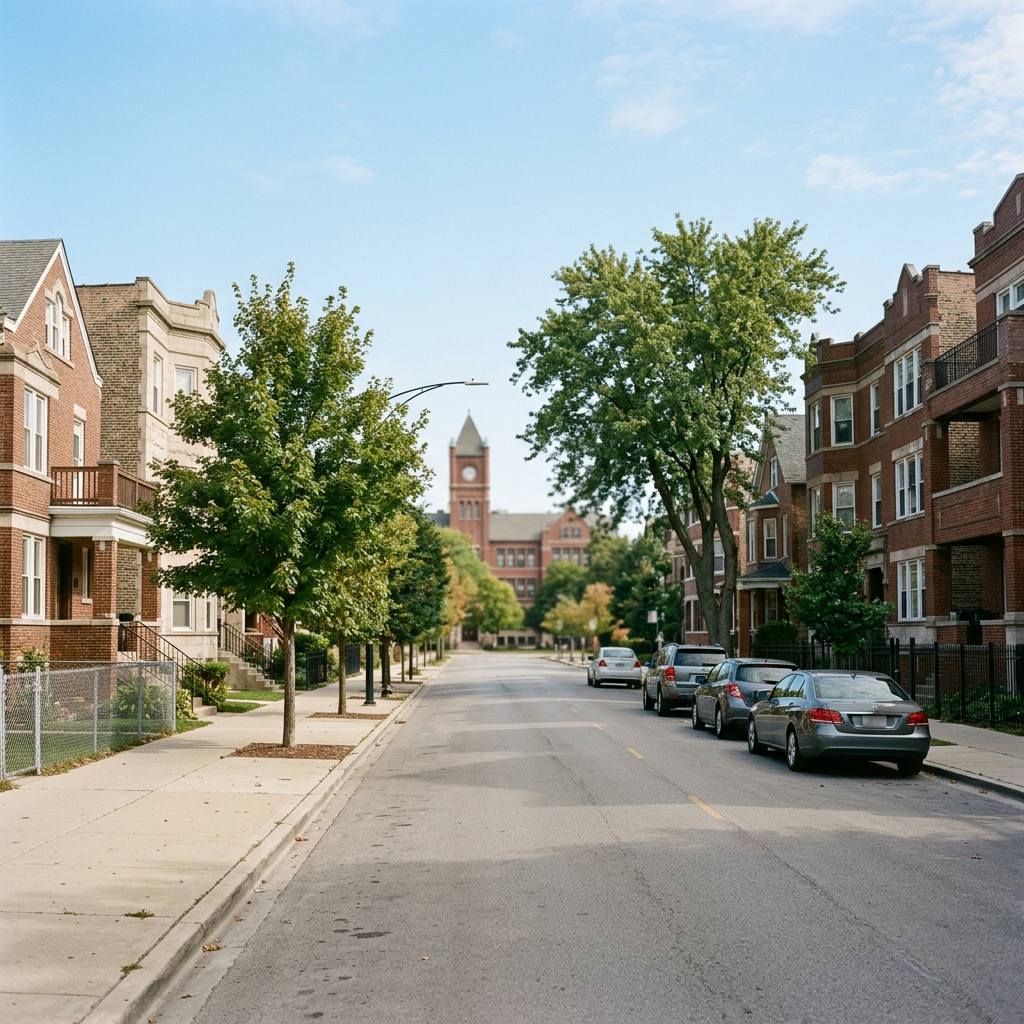
Registrants who are required to register because of an offense against a minor may not knowingly reside within 500 feet of a school, playground, childcare facility, or other location specifically identified in the Act (730 ILCS 150/8.7). Many municipalities in the Chicago metropolitan area have layered additional local ordinances on top of the state floor, extending prohibited zones further. This means a registrant moving into Cook County must check not only state law but also the specific municipal ordinances of the city or village where they plan to live.
Proximity to Schools and Parks
Separately from the residency restriction, certain registrants are prohibited from being present within 500 feet of a school building or school property when children are present, unless they have a specific lawful reason to be there. Parks, playgrounds, and pools that serve children carry similar restrictions depending on the circumstances of conviction.
Employment Restrictions
Registrants convicted of offenses against minors are generally prohibited from working at or volunteering with organizations that primarily serve children. Child sex offenders may not work within 500 feet of a school or childcare facility. Illinois also prohibits certain sex offenders from working as licensed security officers or in other positions of trust.
Halloween and Holiday Restrictions
Illinois law restricts certain registered sex offenders from participating in Halloween events and from having contact with children during trick-or-treating hours. Registrants subject to this provision must follow notification requirements set by local law enforcement.
Travel Outside Illinois
If a registrant plans to travel outside Illinois for more than three days, they must notify their registering law enforcement agency. Federal law (the Sex Offender Registration and Notification Act, or SORNA) also requires registrants who travel between states to register in the destination state.
Consequences of Failing to Register
Failure to comply with any registration requirement under SORA is a separate criminal offense — it is not simply a technical violation handled through probation or parole.
Criminal Penalties
A first failure to register is a Class 3 felony under 730 ILCS 150/10, punishable by two to five years in the Illinois Department of Corrections. If the underlying sex offense for which registration is required was a Class X felony or an offense against a minor, failure to register is elevated to a Class 2 felony, carrying a sentencing range of three to seven years.
A subsequent failure-to-register conviction is a Class 2 felony regardless of the underlying offense, and it must be served at 85 percent — meaning little or no possibility of early release through good time credit.
Extended Registration
Any period during which a registrant fails to register does not count toward the 10-year registration period. The clock is tolled — stopped — during non-compliance. A person who was supposed to be done registering in year seven but stopped reporting for two years effectively resets the clock and may end up registering for 12 or more years.
Prosecutions in Cook County
The Cook County State's Attorney's Office, located at the Leighton Criminal Court Building at 26th and California in Chicago, regularly prosecutes failure-to-register cases. These cases are not treated as minor administrative matters. Courts and prosecutors view registration violations seriously because the entire purpose of the Act is to track registrants' whereabouts.
Practical Consequences
Beyond prison time, a failure-to-register conviction carries additional collateral consequences: it appears on the person's criminal record, can affect housing eligibility, can result in parole or probation revocation, and may trigger federal prosecution in cases involving interstate travel or federal jurisdiction. If a registrant is on supervised release from the Illinois Department of Corrections, non-compliance with SORA is almost certainly a condition of release, meaning violation can send them back to prison on the original sentence as well.
The stakes of non-compliance are high enough that anyone facing registration obligations — or a failure-to-register charge — should speak with a criminal defense attorney as soon as possible. The law in this area is detailed and continues to evolve.
Frequently Asked Questions
The editorial team researches and writes plain-language immigration information, drawing on official government sources and reviewing each page for clarity and accuracy.
Sources & Citations
- [1]Official Government Source: Illinois Sex Offender Registration Act, 730 ILCS 150 — Illinois General Assembly
- [2]Official Government Source: Illinois State Police Sex Offender Registry — Public Search
- [3]Official Government Source: Illinois Sexually Violent Persons Commitment Act, 725 ILCS 207 — Illinois General Assembly
- [4]Official Government Source: Illinois Criminal Sexual Assault Statutes, 720 ILCS 5/Article 11 — Illinois General Assembly
More criminal defense insights
Insights

Need help with your criminal case?
Our experienced Chicago criminal defense attorneys offer confidential consultations to review your case and outline clear next steps.
Request a Consultation